Lifecycle and Obsolescence Management: Extending Control System Lifespans
The Central Role of Controllers in Factory Automation
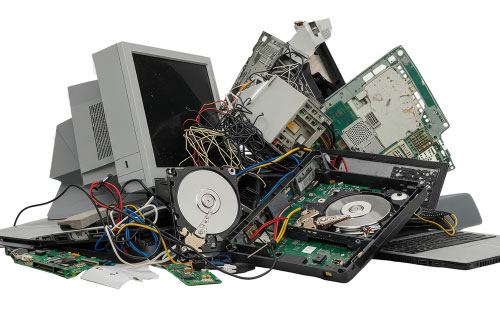
Controllers are the heart of control systems, coordinating process control, operator interfaces, and safety applications. When hardware reaches end-of-life or becomes obsolete, it can halt entire systems, as critical components may no longer receive support. Therefore, effective lifecycle management is essential for maintaining uptime, reducing costs, and avoiding safety risks.
How Modular Design Minimizes Downtime
Traditional controller replacements often require extensive rewiring, system revalidation, and recertification. These steps increase cost, time, and operational risk. Modular architecture addresses this challenge by allowing compute modules to be upgraded independently of I/O wiring or control logic. As a result, upgrades become predictable tasks rather than disruptive overhauls.
Lifecycle Forecasting: Planning Ahead for Obsolescence
Proactive asset management starts with forecasting component lifecycles. Lifecycle forecasting tracks controller modules, CPUs, I/O parts, and supply-chain trends to plan replacements ahead of time. For instance, a compute module approaching end-of-life can be swapped while preserving the existing carrier board and wiring. Conversely, aging I/O components may trigger a carrier revision but leave the processing layer intact. This strategy limits outages and keeps system validation requirements minimal.
Separating Compute from I/O: A Practical Obsolescence Mitigation
A key design principle is decoupling the processing layer from I/O connections. By mounting field wiring on stable carrier boards instead of compute modules, organizations can replace CPUs or operating systems without disturbing critical wiring. Modular systems using open standards like COM Express or COM-HPC allow seamless upgrades across generations, reducing the risk of full-system rewrites.
Moreover, adapters and backward-compatible interfaces extend the life of installed assets. This approach preserves prior investments, minimizes waste, and supports digital continuity initiatives.
Future-Proofing Automation Systems
The separation of compute and I/O layers ensures long-term flexibility. The compute module evolves with technology, offering improved performance or power efficiency, while the carrier board and wiring remain unchanged. As a result, validation efforts shrink, upgrade windows shorten, and system reliability improves. Implementing modular architecture establishes a foundation for sustainable automation, aligning plant upgrades with technological advancements.
Building a Roadmap for Long-Term Control System Management
- Catalog Components – Document compute modules, CPUs, memory, storage, firmware, OS, and I/O configurations.
- Adopt Two-Board Architecture – Keep processing on the COM module; land field wiring on the carrier board.
- Verify Lifecycle Compatibility – Choose modules with multi-year availability and confirm I/O part support.
- Pilot Upgrades – Test modular swaps in non-critical areas to validate compatibility.
- Align with Maintenance Windows – Schedule replacements during planned outages or capital projects.
- Document Every Configuration – Record versions, BIOS levels, OS, firmware, carrier revisions, and connector maps for repeatable future upgrades.
Following this roadmap transforms obsolescence from an emergency into a planned, manageable activity.
Sustaining Performance Through Proactive Stewardship
By treating obsolescence as a predictable process, automation teams can extend system lifespans, maintain uptime, and control costs. Modular design preserves wiring and validation, while allowing performance improvements through periodic compute upgrades. Over time, this approach shifts lifecycle management from reactive fixes to proactive stewardship.
Application Scenarios and Practical Benefits
- Refinery DCS Upgrades – Swap compute modules without disturbing hazardous-area I/O.
- Discrete Manufacturing – Upgrade PLC CPUs to improve processing speed while keeping existing sensors and actuators.
- Legacy Plant Modernization – Extend equipment life by retrofitting COM modules while preserving costly I/O wiring.
In each case, modular architecture reduces downtime, simplifies certification, and aligns upgrades with operational priorities.