COMAU Highlights AI’s Potential to Promote the Development of the Industrial System at ETFA 2025
AI Strategy for Industrial Automation Presented at ETFA 2025
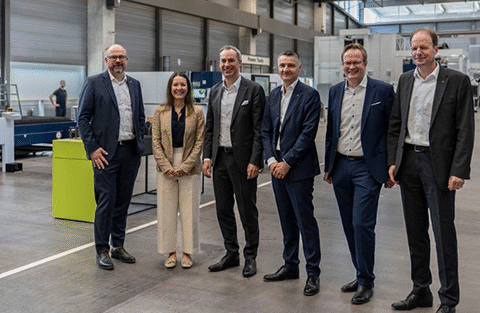
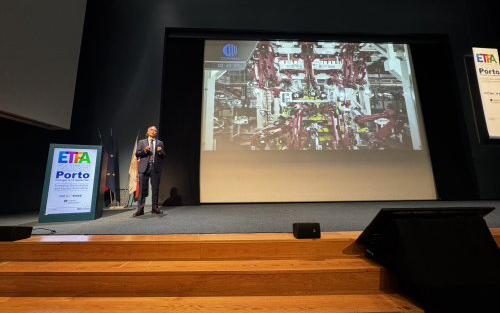
Comau presented its artificial intelligence strategy at ETFA 2025 in Porto, Portugal. The event took place from September 9 to 12. Therefore, it gathered global experts in factory automation and enabling technologies.
ETFA, organized under IEEE, remains a leading conference for emerging technologies in industrial systems. Moreover, the event encourages collaboration between academia and industry. This environment supports innovation in industrial automation, robotics, and digital transformation.
Comau used the platform to highlight how AI strengthens modern manufacturing. In addition, the company emphasized practical deployment rather than theoretical concepts. This approach aligns with real-world industrial requirements.
Machine Learning Applications in Factory Automation
Giovanni Di Stefano, Head of Advanced Robotics at Comau, delivered a presentation on neural networks in robotics. He explained how industrial heritage data supports advanced AI model development. Therefore, Comau leverages decades of experience in factory automation.
The company integrates machine learning to improve robotic system performance. Moreover, it applies AI to optimize efficiency in production lines. These solutions support industries beyond automotive manufacturing.
Comau builds customized AI models for specific technical needs. Consequently, customers receive tailored solutions instead of generic algorithms. This strategy improves reliability in complex industrial environments.
Leveraging Industrial Data for Control Systems Optimization
Comau has over 50 years of experience in industrial automation. Over time, the company digitized its engineering knowledge through Product Lifecycle Management systems. As a result, it created a valuable industrial data archive.
This data supports the training of neural networks for real operational scenarios. Therefore, AI models reflect real production conditions rather than simulated environments. In industrial control systems, data quality directly impacts performance.
From an industry perspective, combining legacy expertise with AI enhances competitiveness. However, success depends on structured data governance and engineering discipline. Comau demonstrates this integration through its development process.
AI-Driven Robotics Innovation and Engineering Efficiency
Comau applies artificial intelligence to improve robot joint stiffness calculations. This technology enhances motion precision and overall system quality. Moreover, it contributes to better performance in industrial robotics applications.
The company also uses AI to design robotic welding gripper arms. Therefore, engineers reduce development time and engineering costs. This improvement increases productivity in manufacturing projects.
These innovations support advanced applications in PLC- and DCS-based environments. In addition, they align with modern requirements for flexible factory automation. As industries demand higher precision, AI-supported engineering becomes increasingly important.
MI.RA Vision Systems and Intelligent Quality Control
Comau developed the MI.RA (Machine Inspection Recognition Archetypes) family of vision systems. These solutions integrate artificial intelligence with industrial inspection processes. Consequently, robots gain enhanced perception capabilities.
MI.RA/OnePicker enables robots to identify and pick heterogeneous objects autonomously. Therefore, it improves efficiency in logistics and assembly operations. This capability supports flexible production lines.
MI.RA/Thermography provides inline quality verification for welding processes. In particular, it supports battery manufacturing applications. As a result, manufacturers strengthen process control and product reliability.
From a control systems perspective, AI-based vision reduces manual inspection dependence. Moreover, it improves traceability and quality assurance in high-volume production.
Industry Impact and Strategic Perspective on AI in Manufacturing
Comau views artificial intelligence as a strategic opportunity for industrial transformation. Therefore, the company focuses on proprietary AI models rather than external generic platforms. This approach protects intellectual property and technical differentiation.
In my assessment, AI integration in industrial automation must remain application-driven. Technology should solve measurable production challenges. Consequently, companies should prioritize practical deployment over experimental implementation.
Comau’s participation in ETFA 2025 reflects its commitment to global innovation dialogue. Moreover, collaboration between research institutions and industry accelerates technology transfer. This synergy supports sustainable development in factory automation.
Application Case: AI in Robotic Welding and Battery Production
Consider a battery manufacturing plant using automated welding systems. The production line requires precise joint quality and consistent inspection. Therefore, AI-based thermography systems can monitor weld integrity in real time.
Comau’s MI.RA/Thermography solution enhances inline quality control. As a result, operators detect defects early and reduce rework. This approach improves efficiency and product safety.
In addition, AI-optimized robotic design shortens commissioning time. Therefore, integrators can deploy automation systems faster. This benefit supports industries adopting advanced control systems and smart manufacturing strategies.
Solution Scenario: AI-Enhanced Factory Automation Infrastructure
A multinational manufacturer operating PLC and DCS-based plants can integrate AI-driven robotics. Comau’s customized models adapt to existing factory automation architectures. Therefore, companies enhance performance without replacing core systems.
This strategy reduces transition risks during digital transformation. Moreover, it strengthens competitiveness in global markets. AI integration becomes a practical upgrade path rather than a disruptive change.
Overall, Comau demonstrates how industrial experience and artificial intelligence can work together. Consequently, the company positions AI as a long-term enabler of productivity, quality, and innovation in industrial automation.