IFCO Opens State-of-the-Art Facility in Texas, Driving Innovation in Fresh Grocery Supply Chain
Strategic Expansion Strengthens Fresh Food Supply Chains in North America
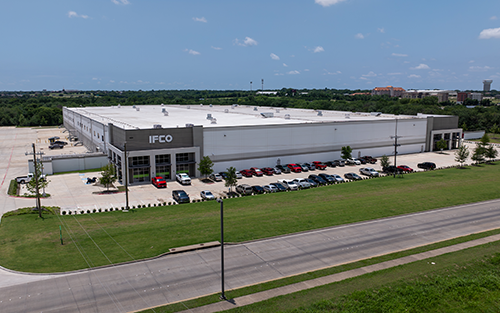
IFCO has opened a new service center in Mesquite, near Dallas, Texas. Therefore, the company strengthens its reusable packaging operations in North America. This purpose-built facility supports the growing demand for efficient fresh food logistics. Moreover, it reinforces IFCO’s commitment to smarter and more sustainable supply chains.
Dallas offers a central location with access to major transportation corridors. As a result, the site improves connectivity between growers and retailers across the United States. In my view, regional hubs like this improve responsiveness in modern retail distribution networks.
The investment reflects increasing expectations for food safety, sustainability, and operational efficiency. Consequently, reusable packaging continues to gain importance in large-scale grocery systems.
Advanced Automation and Industrial-Scale Washing Systems
The Dallas Service Center spans 240,000 square feet. It includes 15 loading docks designed for high-volume operations. In addition, the facility integrates automated and energy-efficient washing lines.
These systems improve crate processing speed and consistency. Therefore, IFCO can handle millions of reusable packaging containers annually. Automation also enhances hygiene control, which remains critical in fresh food logistics.
From an operational perspective, standardized washing processes reduce variability. Moreover, this supports compliance with food safety requirements. Efficiency and traceability now play central roles in retail supply chains.
Supporting Retailers, Growers, and End Consumers
IFCO serves leading grocery retailers and fresh produce growers across the region. The new facility will service millions of reusable crates each year. Consequently, it supports millions of fresh food shipments to American households.
Senior leadership emphasizes responsibility within the supply chain. Chris Young, Senior Vice President of Supply Chain, highlighted the company’s role in delivering fresh products safely and sustainably. This customer-focused approach aligns with long-term partnerships in the retail sector.
In practice, reusable packaging helps maintain product freshness during transit. Therefore, it contributes to reduced food waste and improved product quality.
Environmental Performance and Circular Economy Impact
The Dallas center advances IFCO’s SmartCycle model. This system promotes reuse and supports circular economy principles. Moreover, reusable packaging reduces reliance on single-use materials.
The facility supports more than 40 million crate services annually. In addition, IFCO reports over 450 million family interactions supported each year. These metrics demonstrate large-scale impact beyond facility operations.
More than 1 billion consumer touchpoints reflect the company’s global reuse network. Therefore, IFCO connects environmental strategy with measurable supply chain performance. From an industry perspective, this integration of sustainability and logistics efficiency represents a significant trend.
Industry Perspective: Reusable Packaging in Modern Retail Logistics
Fresh food distribution depends on reliable packaging solutions. Consequently, reusable packaging containers (RPCs) play an essential role in retail networks. They protect products, streamline handling, and support standardized workflows.
As grocery chains expand omnichannel operations, logistics complexity increases. Therefore, centralized service hubs help maintain consistency across regions. The Dallas location strengthens IFCO’s North American footprint.
In my assessment, investments in regional infrastructure demonstrate confidence in long-term demand for sustainable packaging. Moreover, companies that align operational efficiency with environmental goals gain competitive advantages in B2B markets.
Application Scenario: Optimizing Fresh Produce Distribution
Consider a large retailer sourcing produce from multiple regional farms. The retailer requires consistent packaging quality and rapid turnaround. Therefore, reusable crate circulation becomes essential.
The Dallas service center can wash, stage, and redeploy crates efficiently. As a result, growers receive clean containers quickly. Retailers also benefit from improved inventory flow.
This model reduces single-use packaging waste. Moreover, it lowers overall logistics costs. In high-volume grocery systems, such efficiency directly supports profitability and sustainability targets.
Solution Scenario: Enhancing National Fresh Food Networks
For multi-state grocery chains, centralized service centers improve route optimization. Therefore, IFCO can focus on efficient supply lanes where crate reuse delivers maximum impact. This approach enhances both operational performance and environmental outcomes.
The Dallas facility supports scalable growth across IFCO’s North American portfolio. In addition, it increases service reliability in one of the country’s most important logistics regions.
Overall, the expansion demonstrates how industrial-scale automation and sustainability can work together. Consequently, IFCO strengthens its leadership position in reusable packaging solutions for the fresh food industry.