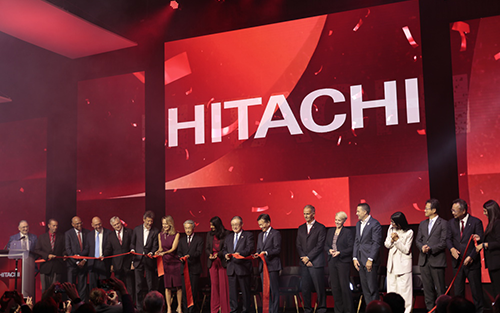
Hitachi Accelerates Growth With U.S. Investments in Advanced Manufacturing, Electrification
Strategic Investment in Industrial Automation and U.S. Manufacturing Growth
Hitachi has announced major investments across the United States.
These initiatives support advanced manufacturing, energy infrastructure, and digital transformation.
Moreover, the strategy aligns with long-term growth in industrial automation and smart factory development.
The company integrates IT, OT, and engineering expertise under its global vision.
Therefore, it strengthens local production capacity while supporting economic resilience.
In addition, the investments reinforce supply chains for critical infrastructure industries.
From an industrial perspective, this expansion reflects rising demand for factory automation.
Manufacturers increasingly require integrated control systems and digital platforms.
As a result, global automation leaders continue to expand regional capabilities.
Digital Factory Innovation in Smart Rail Manufacturing
Hitachi Rail opened a new digital lighthouse factory in Maryland.
The facility applies advanced factory automation and data-driven production systems.
Moreover, it demonstrates how digital transformation improves industrial efficiency.
The plant integrates AI-enabled manufacturing solutions under the Lumada platform.
It also incorporates private 5G connectivity for real-time data exchange.
Therefore, engineers can optimize workflow, material handling, and production tracking.
The factory supports metro railcar production for major U.S. cities.
In addition, it creates hundreds of direct jobs and strengthens regional supply chains.
This approach shows how industrial automation enhances both productivity and sustainability.
From my industry perspective, digital factories represent the next phase of modernization.
However, success depends on seamless integration between software, hardware, and operations.
Companies that combine these elements achieve measurable performance improvements.
Power Grid Expansion and Energy Infrastructure Modernization
Hitachi Energy announced significant investments in U.S. transformer manufacturing.
These projects support electrical grid stability and renewable energy integration.
Moreover, they address rising power demand from data centers and AI infrastructure.
The company will expand transformer production capacity across multiple states.
Therefore, it strengthens the domestic supply of high-voltage equipment.
In addition, the investments support thousands of skilled manufacturing jobs.
Reliable transformers and control systems are essential for modern grids.
They ensure stable voltage regulation and efficient energy distribution.
Consequently, energy automation plays a critical role in national infrastructure resilience.
In my view, energy sector automation will continue to grow rapidly.
Industrial control systems must support electrification and digitalization simultaneously.
This convergence creates new opportunities for engineering innovation.
Automation Headquarters for Integrated Industry Solutions
JR Automation, part of the Hitachi Group, plans a new global headquarters.
The facility will support advanced automation and digital engineering collaboration.
Moreover, it will strengthen capabilities in integrated industrial solutions.
The campus will feature demonstration areas for customers and partners.
It will also support digital twin technology and edge computing applications.
Therefore, engineers can design and validate systems before deployment.
This investment reflects growing demand for scalable automation platforms.
Manufacturers increasingly seek end-to-end control system integration.
As a result, automation providers must deliver flexible and data-driven solutions.
From an operational experience standpoint, centralized innovation hubs improve responsiveness.
They accelerate testing, training, and system customization.
This structure enhances long-term customer support and technical reliability.
Leadership Vision and Long-Term Industrial Strategy
Hitachi continues to execute its global management strategy.
The company focuses on sustainable growth and social innovation.
Moreover, it emphasizes harmonized development across environment, economy, and technology.
Executive leadership highlights digital transformation as a core priority.
Therefore, investments in industrial automation remain central to corporate planning.
The strategy connects manufacturing expansion with societal infrastructure needs.
The company operates across energy, mobility, and digital sectors.
In addition, it leverages integrated solutions to solve complex challenges.
This cross-sector approach strengthens both technical capability and market authority.
In the industrial automation sector, credibility depends on execution.
Hitachi’s long history in control systems supports its reputation.
Consequently, the company maintains strong positioning in global markets.
Industry Impact on PLC, DCS, and Factory Automation Trends
Modern factories rely on PLC and DCS architectures.
These systems coordinate processes, safety functions, and data acquisition.
Moreover, they form the backbone of industrial automation networks.
Digital integration enhances traditional control systems.
It enables predictive maintenance and real-time analytics.
Therefore, manufacturers improve uptime and operational efficiency.
The expansion of smart factories accelerates adoption of connected technologies.
Edge computing and AI applications complement conventional automation platforms.
As a result, factory automation evolves toward fully integrated ecosystems.
Industry observers expect continued convergence of IT and OT systems.
However, successful implementation requires skilled engineering and system integration expertise.
Companies that invest in digital infrastructure will gain competitive advantages.
Application Cases and Solution Scenarios
Smart Rail Manufacturing
Digital factories use AI-based monitoring systems.
They improve production visibility and quality control.
Consequently, rail operators receive more reliable rolling stock.
Energy Grid Modernization
Transformer production supports renewable integration.
High-voltage components stabilize power distribution networks.
Therefore, utilities maintain grid reliability under increasing demand.
Advanced Automation Headquarters
Centralized R&D accelerates system design and deployment.
Digital twin models reduce commissioning risks.
In addition, collaborative engineering improves project efficiency.
Integrated Industrial Control Systems
Manufacturers combine PLC and DCS platforms with cloud analytics.
This integration enhances performance monitoring and predictive maintenance.
As a result, facilities achieve higher productivity and transparency.
Conclusion: Industrial Automation as a Driver of Sustainable Growth
Hitachi’s U.S. investments demonstrate a long-term industrial commitment.
The company strengthens manufacturing, energy infrastructure, and automation capabilities.
Moreover, it aligns digital transformation with economic development.
Industrial automation continues to shape modern production systems.
Therefore, companies must integrate advanced control systems and data platforms.
In addition, strategic investment in smart factories ensures future competitiveness.