
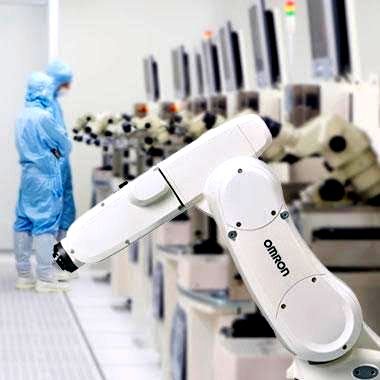
OMRON Enhances Semiconductor Manufacturing Automation with 3D Inspection and Digital Twin Solutions
OMRON Semiconductor Automation Solutions: 3D Inspection
OMRON Showcases Next-Generation Industrial Automation Solutions at SEMICON Taiwan 2026
OMRON will present its latest semiconductor manufacturing automation technologies at SEMICON Taiwan 2026, held from September 2 to 4, 2026, at Taipei Nangang Exhibition Center. The company will demonstrate advanced inspection systems, Digital Twin applications, and quality data solutions at booth Q5842 in TaiNEX 2.As semiconductor production becomes more complex, manufacturers require more than traditional defect detection. They now need industrial automation systems that identify process causes, improve production stability, and optimize manufacturing performance. Therefore, OMRON focuses on combining inspection technology, control systems, and data analysis to support smart factory development.Advanced Packaging Drives New Requirements for Factory Automation
The semiconductor industry continues to expand advanced packaging technologies, including chiplets, microbumps, and Through Glass Vias (TGVs). These technologies improve computing performance but also create new inspection challenges.Traditional inspection methods cannot always detect internal defects accurately. As a result, manufacturers increasingly adopt 3D inspection systems and automated quality analysis platforms. OMRON addresses these challenges through integrated factory automation solutions that connect inspection equipment with production processes.From an industrial automation perspective, this approach follows the development trend of modern PLC, DCS, and control systems. Manufacturing companies now require real-time data visibility across equipment, processes, and production lines.3D CT X-ray Inspection Improves Semiconductor Quality Control
OMRON will demonstrate its CT-based 3D X-ray automated inspection solution for advanced semiconductor packaging applications. The system uses automated X-ray inspection (AXI) combined with computed tomography technology to analyze internal structures.The solution can evaluate critical components such as TGV structures, microbumps, bonding areas, and void conditions. Moreover, it provides quantitative inspection results instead of simple pass or fail decisions.During research and development stages, engineers can use detailed 3D images to analyze packaging performance. During mass production, manufacturers can apply consistent inspection standards across multiple production lines.Based on industrial automation experience, accurate inspection data helps reduce repeated troubleshooting and supports faster process optimization. Therefore, inspection technology becomes an important part of modern manufacturing control systems.Digital Twin Technology Connects Quality Data with Process Optimization
OMRON is also developing Digital Twin solutions through collaboration with NVIDIA Omniverse. The system combines visual inspection data, X-ray analysis results, and manufacturing information to create virtual production models.Digital Twin technology allows engineers to simulate product conditions before making physical process changes. For example, manufacturers can analyze substrate warpage, bonding quality, and process variation through digital models.Moreover, artificial intelligence can analyze Quality Data and identify possible process risks. This creates a closed-loop improvement method that connects inspection results with manufacturing adjustments.In modern smart factories, Digital Twin technology works together with PLC systems, industrial networks, and automation software platforms. This combination helps companies improve production efficiency while maintaining strict quality requirements.Semiconductor Automation Requires Integrated Control Systems
Beyond inspection equipment, OMRON will display wafer handling technologies, component solutions, safety products, and sensor technologies developed for semiconductor manufacturing.Semiconductor factories require highly coordinated automation environments. Equipment controllers, motion systems, sensors, and industrial communication networks must operate together with high precision.Although semiconductor production mainly depends on specialized equipment, industrial automation foundations remain important. PLC controllers, distributed control systems (DCS), and industrial communication technologies provide the infrastructure for stable manufacturing operations.In addition, advanced sensors and automation components help manufacturers improve equipment availability and reduce production interruptions.Industry Perspective: Quality Data Becomes a Key Asset in Smart Manufacturing
The semiconductor market is moving from equipment-focused automation toward data-driven manufacturing. Inspection information is no longer only used for quality judgment. Instead, companies increasingly use Quality Data to improve processes and predict potential failures.From my experience in industrial automation applications, successful smart manufacturing requires three key elements: accurate sensing, reliable control systems, and effective data utilization.OMRON’s approach reflects this industry transition. By combining inspection technology, Digital Twin models, and automation platforms, manufacturers can create more transparent and efficient production environments.However, companies should evaluate system integration carefully. Data quality, communication standards, and equipment compatibility directly influence the success of smart factory projects.Technical Presentation Highlights Advanced Packaging Inspection
During SEMICON Taiwan 2026, OMRON will deliver a keynote presentation at the Strategic Materials Conference. The presentation will focus on automated inspection technology for advanced packaging using TGV structures.The session will introduce methods for achieving consistent inspection decisions from product development through mass production. This topic reflects a major industry challenge because advanced packaging requires higher accuracy and stronger quality management.Application Scenario: Smart Semiconductor Factory Quality Management
A typical semiconductor factory can integrate OMRON inspection systems with automation control platforms to create a complete quality management workflow.During product development, engineers can use 3D CT inspection data to evaluate packaging designs. During pilot production, manufacturers can analyze process variations through Quality Data. Finally, during mass production, automated inspection systems can maintain consistent quality standards.This integrated approach supports applications such as:- Advanced semiconductor packaging production lines
- Wafer and component inspection systems
- Automated material handling systems
- Smart factory quality management platforms
- Data-driven manufacturing optimization projects