
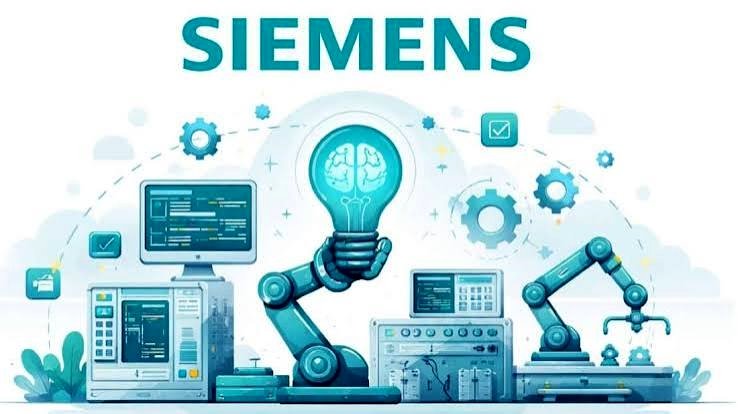
Siemens Strengthens Its Industrial AI Position with Gartner AIoT Recognition
Gartner Names Siemens a Leader in Industrial AIoT
Siemens has been recognized as a Leader in Gartner’s 2026 Magic Quadrant for Global Industrial AIoT Platforms. Gartner published the research on September 15, 2026. (Gartner)The report evaluates industrial AIoT platforms across a market that connects industrial data, automation, analytics, and AI. Gartner also identifies Siemens among the evaluated vendors. (Gartner)For industrial automation users, this recognition reflects a broader shift. AI is moving closer to production systems, operational data, and control environments.Insights Hub Connects Industrial Data and AI
Siemens delivers its industrial AIoT capabilities through Insights Hub, its industrial IoT platform. The platform focuses on turning asset and operational data into actionable manufacturing insights. (Siemens Blog Network)Insights Hub can connect data from industrial equipment, production processes, and engineering environments. It then provides a foundation for analytics and AI-driven manufacturing applications.This approach matters because modern factories generate data across PLCs, DCS platforms, SCADA systems, drives, sensors, and enterprise software.Therefore, an industrial AI platform must do more than collect machine data. It must also provide useful context for operational decisions.AI Moves Beyond Traditional Factory Automation
Traditional factory automation relies heavily on deterministic control. PLCs, DCS controllers, and safety systems execute predefined logic with predictable timing.Industrial AI introduces another layer. It can analyze historical and real-time data to identify patterns, anomalies, and optimization opportunities.Gartner’s 2026 research describes industrial AIoT as a transition toward real-time intelligence and AI-enabled decisions. The research also highlights agentic AI and adaptive autonomy. (Gartner)However, AI does not replace the basic control layer. Production systems still require deterministic control, defined interlocks, safety functions, and established engineering practices.The practical opportunity lies in connecting these layers without weakening operational control.Industrial Data Context Becomes More Important
Data quality remains a major factor in industrial AI projects. A temperature value alone may provide limited operational meaning.Engineers also need information about the equipment, process stage, production order, operating condition, and historical behavior.This is where contextualized industrial data becomes valuable. Siemens positions Insights Hub around manufacturing intelligence and data-driven decision-making. (Siemens Blog Network)In practice, this architecture can support applications such as predictive maintenance, production optimization, quality monitoring, and sustainability analysis.Agentic AI Creates New Automation Possibilities
The latest industrial AIoT market is also moving toward agentic AI. Gartner identifies agentic capabilities as part of the evolution of industrial AIoT platforms. (Gartner)Agentic systems can potentially coordinate data analysis, workflows, and operational recommendations.Siemens says Insights Hub uses its Intelligence Center X technology to support agents and workflows across industrial data. (Siemens Blog Network)For automation engineers, this development deserves careful attention. AI-generated recommendations still need appropriate validation before they influence production operations.Consequently, industrial AI should complement established control engineering rather than bypass it.What This Means for PLC and DCS Environments
The impact of AIoT extends beyond cloud software. Modern industrial architectures increasingly connect field devices with PLC, DCS, SCADA, MES, and enterprise applications.A typical architecture may therefore include:- Field level: sensors, actuators, drives, and instrumentation
- Control level: PLC, DCS, and safety controllers
- Supervisory level: SCADA and HMI systems
- Operations level: MES and production applications
- Data and AI level: industrial IoT platforms, analytics, and AI agents
Why AIoT Matters for Manufacturing Operations
Manufacturers continue to seek higher equipment availability, consistent quality, and better production efficiency.AIoT platforms can support these goals by combining operational data with analytical models and manufacturing context.For example, a manufacturer could analyze drive behavior, motor temperatures, vibration data, and production conditions.The resulting model could identify patterns associated with equipment degradation. Maintenance teams could then investigate the condition before an unplanned stoppage occurs.Such applications still require plant-specific validation. Industrial AI performance depends on data quality, sensor coverage, process stability, and engineering configuration.Siemens Recognition Reflects a Wider Industry Trend
The Siemens announcement also reflects a larger movement across industrial automation.Gartner's 2026 research includes vendors such as ABB, AWS, AVEVA, Bosch, Microsoft, Siemens, and others in the Global Industrial AIoT Platforms market. (Gartner)The market is therefore becoming broader than traditional industrial IoT. Vendors increasingly combine industrial connectivity, data management, analytics, AI, and automation technologies.In my view, the most significant change is not simply the addition of AI. It is the growing connection between operational technology and intelligent software.That connection could reshape how manufacturers approach maintenance, quality, production optimization, and engineering workflows.Practical Application Scenario: Predictive Maintenance
Consider a production line using PLC-controlled motors and variable-speed drives.The control system continues to manage machine sequences and interlocks. Meanwhile, an AIoT platform collects operating data from relevant equipment.The platform can compare current operating patterns with historical conditions. Engineers can then investigate abnormal behavior before it develops into a production interruption.This architecture keeps the PLC responsible for real-time control. AI provides an additional analytical layer above the control system.Practical Application Scenario: Production and Quality Optimization
AIoT can also combine production parameters with quality results.For example, manufacturers can correlate process temperatures, cycle times, material conditions, and machine states with product quality.Engineers can then identify operating conditions associated with better production results.This approach can support continuous improvement without changing the fundamental PLC or DCS control strategy.AI Does Not Remove the Need for Automation Engineering
The rapid development of industrial AI may create unrealistic expectations if companies focus only on software capabilities.Industrial environments have strict requirements for availability, cybersecurity, deterministic control, functional safety, and change management.Therefore, AI deployments should follow established industrial engineering practices.Organizations should also define clear responsibilities between AI applications and control systems before deployment.What Automation Engineers Should Watch Next
The next phase of industrial AIoT will likely focus on practical integration.Key areas include industrial data contextualization, edge-to-cloud connectivity, AI-assisted engineering, predictive maintenance, digital twins, and agent-based workflows.Gartner's 2026 Critical Capabilities research specifically highlights industrial automation, predictive maintenance, digital twins, industrial data management, and AI-defined automation. (Gartner)For users operating large PLC and DCS installations, compatibility with existing infrastructure will remain a major consideration.The strongest industrial AI architectures will need to combine new intelligence with established automation practices.Conclusion: From Connected Machines to Intelligent Operations
Siemens' recognition in Gartner's 2026 Magic Quadrant places industrial AIoT within the wider evolution of factory automation. (Gartner)Insights Hub represents Siemens' approach to connecting industrial data with analytics and AI-driven manufacturing applications. (Siemens Blog Network)For manufacturers, the practical question is no longer whether industrial data has value. The question is how effectively organizations can convert that data into controlled operational improvements.As AI moves deeper into manufacturing, PLCs, DCS, control systems, and AI platforms will increasingly operate as connected layers within the same industrial architecture.
Read More
Categories:
Uncategorized