 CoaXPress Interface Accelerates Video Streaming in Deep-Tissue Microscopy
CoaXPress and Industrial Automation Imaging Evolution
CoaXPress (CXP) has become a leading high-speed interface in modern machine vision systems.
It delivers reliable image transmission between cameras and host PCs in industrial automation environments.
Moreover, it supports real-time data flow for PLC, DCS, and factory automation systems requiring precision imaging.
Therefore, it plays an important role in high-performance control systems and inspection platforms.CXP uses standard coaxial cables, which simplifies installation and maintenance.
In addition, it provides both data transfer and power delivery over a single connection.
This combination reduces system complexity and improves reliability in demanding industrial environments.
High-Speed Data Transfer for Machine Vision Systems
CXP technology supports data rates up to 12.5 Gbps per channel.
Moreover, multi-link configurations can significantly increase total bandwidth.
This allows ultra-fast image streaming from high-resolution industrial cameras.As a result, engineers achieve near-zero latency in imaging applications.
This performance is critical for automated inspection, robotics guidance, and semiconductor testing.
However, it also benefits scientific imaging systems requiring real-time data processing.
Advanced Microscopy Innovation Using CXP Interfaces
Researchers at the Center for Physical Sciences and Technology in Lithuania adopted CoaXPress in advanced optical microscopy.
They developed a Dynamic Full-Field Optical Coherence Microscopy (d-FF-OCM) system.
This system improves imaging depth and resolution in biological tissue analysis.Moreover, it offers a non-invasive alternative to conventional Optical Coherence Tomography systems.
The setup uses a high-intensity incoherent white light source and precision optical components.
Therefore, it enables clearer visualization of biological structures at micro-scale levels.
High-Performance Data Acquisition Architecture
The system integrates an Adimec 2-megapixel CMOS camera with a BitFlow Cyton-CXP4 frame grabber.
This configuration ensures stable and high-speed data transfer to the processing unit.
When using four CXP links, the system reaches up to 25 Gbps throughput.As a result, it achieves 500 frames per second at 1440 × 1440 resolution.
This performance far exceeds conventional imaging systems operating at around 100 fps.
In addition, it supports real-time analysis using LabVIEW-based software.
Impact on Industrial Automation and Control Systems
Although this system targets biomedical research, its architecture reflects trends in industrial automation.
High-speed imaging is increasingly important in smart factories and robotics inspection systems.
Moreover, integration with control platforms improves decision-making speed in automated environments.PLC and DCS systems benefit from faster visual feedback loops.
Therefore, CoaXPress-based architectures support next-generation factory automation solutions.
This convergence of imaging and control technology strengthens industrial digitalization strategies.
Expert Perspective on Technology Trends
From an engineering standpoint, CoaXPress demonstrates how simplified hardware can achieve extreme performance.
It reduces dependency on complex network protocols while maintaining deterministic data flow.In my view, this technology bridges the gap between scientific imaging and industrial automation.
Moreover, it shows how machine vision will continue influencing smart manufacturing systems.
However, successful deployment still requires careful system integration and thermal design considerations.
Application and Industrial Use Cases
CoaXPress-based systems are suitable for multiple high-demand environments.
These include semiconductor inspection, robotics vision, medical imaging, and automated quality control.In addition, deep-tissue imaging research demonstrates its value in life sciences.
Therefore, industries requiring ultra-fast, high-resolution imaging should consider CXP-based architectures.
This approach ensures scalability, reliability, and long-term system stability.

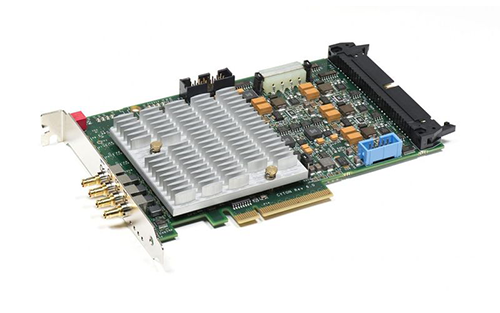 CoaXPress Interface Accelerates Video Streaming in Deep-Tissue Microscopy