Qualcomm Expands Beyond Smartphones Into Industrial Automation
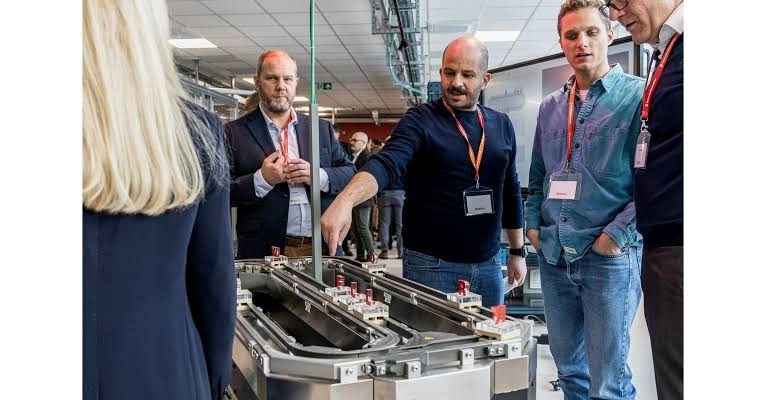
Qualcomm is extending its computing expertise beyond smartphones and into industrial automation, robotics, and connected devices.The company is positioning its Dragonwing platform as a major foundation for its expanding B2B technology business.On August 31, Qualcomm Technologies hosted Qualcomm Dragonwing IoT Day in Seoul, South Korea.The event attracted about 500 representatives from customers, technology partners, manufacturers, and telecommunications companies.Participants included Samsung Electronics, LG Electronics, Hyundai Motor, SK Telecom, KT, and LG Uplus.The event demonstrated Qualcomm's growing focus on industrial edge computing and on-device artificial intelligence.
Dragonwing Targets the Industrial Edge Computing Market
Qualcomm introduced Dragonwing as a broad B2B platform rather than another processor product family.The platform combines computing, connectivity, artificial intelligence, software, and development tools.It targets industrial IoT, embedded systems, networking infrastructure, robotics, and smart devices.This approach reflects a major change in industrial computing architecture.Manufacturers increasingly want AI processing closer to machines, sensors, cameras, and control systems.Therefore, edge computing can reduce cloud dependency and shorten response times for time-sensitive applications.This capability matters particularly in machine vision, autonomous robotics, industrial inspection, and safety monitoring.

Edge AI Creates New Opportunities for Factory Automation
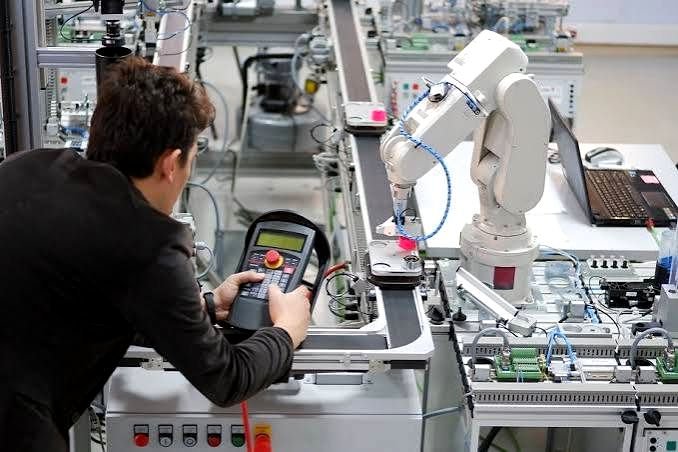
Traditional factory automation relies heavily on PLC, DCS, SCADA, and dedicated control systems.These systems remain important for deterministic machine control and process management.However, AI introduces additional workloads that require high-performance computing and specialized acceleration.Vision analysis, predictive inspection, object detection, and natural-language interfaces can generate significant processing requirements.Edge AI allows these workloads to run directly on industrial devices.As a result, factories can analyze sensor and camera data without continuously transferring raw information to cloud servers.This architecture can also reduce network traffic and improve response times.For industrial engineers, the main question remains system integration rather than processor performance alone.The AI platform must communicate effectively with PLC networks, sensors, cameras, HMIs, and existing control infrastructure.
Qualcomm Linux 2.0 Supports Industrial AI Development
Qualcomm also highlighted software technologies designed to simplify industrial AI development.These technologies include Qualcomm Linux 2.0, the Qualcomm Intelligent Robotics Product SDK, and Qualcomm AI Workflow.The software environment helps developers move AI applications from development environments toward embedded deployment.This matters because industrial projects often face long development and validation cycles.Hardware acceleration alone cannot solve these integration challenges.Developers also need operating systems, middleware, AI frameworks, device drivers, development tools, and lifecycle support.Therefore, Qualcomm's platform strategy focuses on the complete development chain.
Robotics Becomes a Major Dragonwing Application
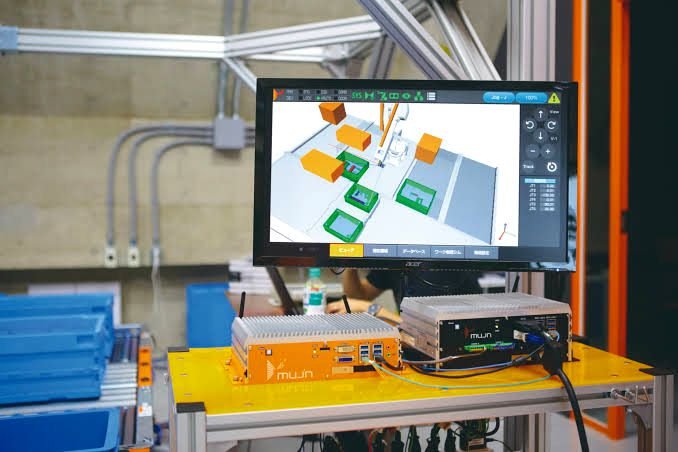
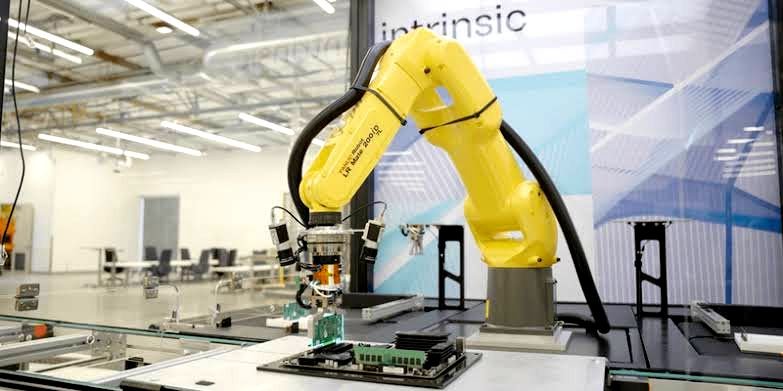
Robotics represents one of the strongest applications for edge AI technology.Industrial robots must process information from cameras, sensors, encoders, and other perception systems.They must then make decisions while maintaining precise motion and safety requirements.Qualcomm demonstrated its Dragonwing IQ10 Robotics Reference Design during the Seoul event.The design supports on-device AI, perception functions, and robotic control workloads.From an automation engineering perspective, this architecture can support applications such as autonomous mobile robots and intelligent inspection systems.However, AI computing should complement deterministic PLC and motion-control functions.Safety-related functions still require appropriate architectures, validation, and safety-rated components.
Sixteen Demonstrations Show Commercialization Potential
Qualcomm and ten partner companies presented 16 demonstrations covering industrial AI and connected-device applications.The demonstrations included robotics, machine vision, industrial cameras, smart home systems, and AI-assisted automation.Arduino presented the VENTUNO Q development platform using Qualcomm's IQ8 technology.Qualcomm also demonstrated an AI Media Station based on the Dragonwing Q8 Series.Other demonstrations showed real-time object recognition and Always-On Vision capabilities.These examples demonstrate how edge AI can move from laboratory development into practical embedded products.
Industrial Vision Connects AI With Quality Inspection
Industrial vision represents another important application area for Dragonwing technology.Advantech demonstrated industrial vision inspection and a vision-language model developed with Zetic AI.Such systems can analyze images while adding AI-based interpretation capabilities.Traditional machine vision often depends on predefined rules and carefully engineered inspection algorithms.AI-based vision can handle more complex visual patterns and variable production conditions.However, engineers must still evaluate detection accuracy, latency, lighting conditions, false positives, and model maintenance.These factors directly influence the suitability of AI vision for production environments.
Robotics Platforms Demonstrate Edge AI Performance
SST presented several Dragonwing-based systems during the event.Its demonstrations included a booster robot using the Dragonwing QCS8550 platform.The company also presented an AI home hub based on Dragonwing Q-8750 technology.A quadruped robot based on the Dragonwing QCS9075 further demonstrated robotic edge computing capabilities.These platforms show how one computing architecture can support different form factors.For industrial automation, this flexibility can simplify hardware development across multiple machine platforms.
Vehicle and Industrial Safety Applications Expand Edge AI
D-TEG demonstrated Dragonwing QCS6490-based AI applications for vehicle and industrial safety.The demonstrations included blind-spot detection and pothole detection.Such applications require continuous image processing and rapid local decision-making.Edge processing can therefore provide advantages when network latency or connectivity limits cloud-based analysis.Similar architectures can support industrial safety cameras, autonomous vehicles, mobile robots, and perimeter monitoring.Nevertheless, safety functions should remain separated from non-safety AI workloads when required by the application architecture.
Industrial AI Ecosystems Require More Than Semiconductor Performance
Other partners demonstrated increasingly sophisticated AI applications.Innodisk presented real-time vision-language model technology.Aetina demonstrated an agentic AI solution for industrial edge applications.Xslab presented a Phi-4 live demonstration.Integrit showed LLM and vision AI technologies, including a vision-language-action model.Namuga demonstrated real-time stereo depth vision.Wiseplus presented Orbit Eye, a multi-channel video analytics platform for industrial edge AI.These demonstrations indicate that industrial AI is moving beyond simple image classification.Systems can increasingly combine perception, reasoning, language, and physical actions.That trend could significantly influence the design of future factory automation architectures.
Korean Companies Strengthen the Dragonwing Ecosystem
Korean technology companies played an important role throughout the Seoul event.Presentations came from Hyundai Motor's Robotics LAB, SST, Integrit, D-TEG, Point Mobile, Xslab, Advantech, Innodisk, Aetina, and Wiseplus.Their participation demonstrates the importance of local ecosystems for industrial AI commercialization.Industrial customers rarely purchase processors in isolation.They require complete solutions involving computing platforms, cameras, sensors, software, AI models, communications, and system integration.Therefore, Qualcomm's partner strategy could become as important as its processor technology.
Dragonwing Could Complement PLC and DCS Architectures
From an industrial automation perspective, Dragonwing should not be viewed as a direct replacement for PLC or DCS platforms.PLCs continue to provide deterministic machine sequencing and real-time control.DCS platforms remain widely used for continuous process control, plant operations, and integrated alarm management.Dragonwing instead fits naturally into higher-level edge computing functions.For example, an industrial architecture could use PLC controllers for deterministic control.An edge AI computer could process camera streams and execute machine-learning models.The AI system could then send validated results to the PLC or SCADA layer.This division creates a practical architecture for combining conventional automation with AI.
Industry Outlook
Qualcomm's Dragonwing strategy reflects a broader shift toward distributed industrial intelligence.AI processing is moving from centralized cloud platforms toward machines, cameras, robots, and embedded controllers.For industrial automation, this trend creates new opportunities for intelligent inspection and autonomous machines.It also creates new engineering requirements around cybersecurity, functional safety, lifecycle management, and system integration.The long-term value of platforms such as Dragonwing will depend on their ability to operate within real industrial architectures.In our view, successful industrial AI will not replace PLC and DCS technology.Instead, it will add an intelligent computing layer around proven control systems.That combination could become an important architecture for the next generation of factory automation.