onsemi Introduces a New Power Architecture
onsemi has introduced its Embedded Power Platform (EPP) for next-generation power systems. The architecture targets AI infrastructure, electric vehicles, and industrial automation. (onsemi)The platform addresses a growing engineering problem: delivering more electrical power within smaller physical spaces. It combines semiconductor, electrical, thermal, and mechanical design within one architecture.This approach differs from conventional power electronics development. Engineers often optimize the semiconductor, package, cooling system, and mechanical structure separately. EPP instead applies a co-design strategy from the beginning.Silicon Wafer Becomes Part of the Power Package
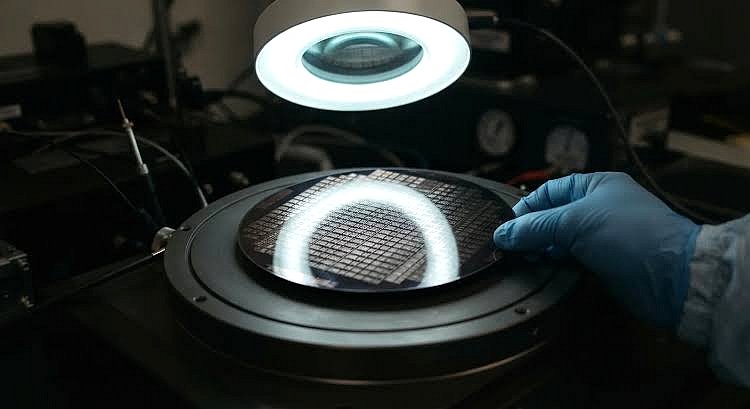
The Embedded Power Platform uses the silicon wafer as the foundation of its package architecture. onsemi therefore treats the package as an active part of system performance.The platform can integrate silicon, silicon carbide (SiC), and gallium nitride (GaN) technologies. It can also combine FETs, drivers, controllers, and other power functions within one wafer-level architecture. (onsemi)Moreover, onsemi says the architecture replaces conventional wire-bond connections with wafer-level redistribution layers. This approach can reduce parasitic effects and improve electrical performance. (onsemi)Electrical, Thermal and Mechanical Co-Design
Power system performance depends on more than semiconductor efficiency. Thermal paths, electrical parasitics, mechanical dimensions, and switching behavior also affect the final system.EPP evaluates these factors together rather than sequentially. Therefore, engineers can identify design trade-offs earlier in development.This method can also reduce late-stage mechanical or thermal redesign. For industrial automation engineers, that matters when power electronics must fit inside compact control cabinets or drive assemblies.12-Inch Manufacturing Supports Power Integration
onsemi says EPP uses its existing 12-inch silicon wafer manufacturing capabilities. The company can therefore apply semiconductor manufacturing processes to system-level power integration. (onsemi)The platform also uses semiconductor design tools and simulation capabilities. This creates a common development environment for electrical, thermal, and mechanical analysis.From an engineering perspective, this integration could simplify development between device design and system design. However, actual production results will depend on application requirements, qualification, and system validation.Higher Power Density for AI Infrastructure
AI data centers continue to increase power demand at the rack level. Power conversion hardware must therefore handle higher currents without consuming excessive rack space.onsemi reports that EPP can provide three- to five-times higher power density, depending on the application. The company also reports improved thermal performance and lower electrical losses. (onsemi)In an early solid-state circuit breaker design, onsemi reports a size reduction of about 50%. The company also reports approximately 20% lower operating temperature compared with conventional designs. (onsemi)These characteristics could have implications for AI infrastructure. Smaller power conversion and protection hardware can potentially leave more physical space for computing equipment and cooling infrastructure.Industrial Automation Can Benefit From Compact Power Systems
Industrial automation presents similar power constraints. PLC systems, DCS platforms, industrial robots, servo drives, and motor-control equipment increasingly require compact power electronics.The EPP architecture could support more integrated power conversion within these systems. onsemi specifically identifies industrial automation as one of the platform's target applications. (onsemi)For factory automation, power density also affects cabinet design. Smaller power stages can simplify enclosure layouts and potentially reduce thermal management requirements.However, automation applications require more than high power density. Engineers must also evaluate voltage ratings, isolation, switching behavior, EMC performance, protection functions, environmental conditions, and lifecycle requirements.Potential Impact on PLC and DCS Control Systems
EPP does not replace a PLC or DCS controller. Instead, its potential role sits within the power and protection layers surrounding control systems.A PLC may control a motor drive, power converter, or production machine. The power stage must then convert and regulate electrical energy according to the control command.A more integrated power architecture could reduce the physical footprint of this supporting hardware. Therefore, future factory automation platforms could combine control, sensing, power conversion, and protection within increasingly compact equipment.The same principle applies to DCS-based process plants. Compact power architectures could support distributed control equipment, remote I/O systems, instrumentation power, and industrial networking infrastructure.SiC and GaN Expand the Architecture Options
The ability to combine silicon, SiC, and GaN technologies gives EPP a broader semiconductor foundation. Each technology can address different voltage, frequency, switching, and efficiency requirements.SiC is already widely used in high-power automotive and industrial applications. GaN can support high-frequency power conversion in suitable voltage ranges.The practical benefit comes from selecting the appropriate semiconductor technology for each power stage. EPP provides an architecture that can accommodate multiple technologies rather than forcing every application into one device technology. (onsemi)Subaru Evaluates EPP for Future Electric Vehicles
Subaru Corporation has entered a strategic technology engagement with onsemi to evaluate EPP for future electrified vehicle architectures.The collaboration gives Subaru access to engineering samples, simulation models, and technical expertise. Subaru will use these resources to evaluate power integration and system-level performance. (onsemi)For electric vehicles, onsemi reports up to four-times higher power density and 15% lower power losses in traction inverter applications compared with conventional approaches. (onsemi)These figures represent onsemi's reported performance claims. Engineers should still evaluate them against specific inverter topology, operating voltage, cooling design, switching conditions, and qualification requirements.Faster Development Could Change Power Electronics Engineering
onsemi says EPP can shorten development cycles to as little as four months. The company attributes this potential improvement to integrated simulation, manufacturing, and system-level co-design. (onsemi)This could change how engineering teams approach power electronics projects. Instead of developing electrical, thermal, and mechanical elements independently, teams can evaluate their interaction earlier.In industrial automation projects, this approach could reduce iterations between electrical engineering, mechanical design, and control-system integration.However, the stated development timeline should not be interpreted as a universal project duration. Qualification, certification, customer validation, and production requirements can significantly affect actual schedules.What EPP Means for Factory Automation
Factory automation is moving toward higher machine density and greater electrical efficiency. Servo systems, robotic cells, automated material handling, and industrial drives all increase the demand for compact power electronics.In this environment, power architecture becomes part of the overall automation design. Engineers must consider not only PLC scan time and network performance, but also power conversion efficiency and thermal limits.EPP could support this trend by moving more power functions into a compact semiconductor-based architecture. Its value will depend on how effectively the technology integrates with existing industrial power and control designs.Engineering Perspective: Power Density Is Becoming a System Constraint
From an industrial automation engineering perspective, power density is becoming a system-level design parameter rather than a simple semiconductor specification.A higher-density power stage can reduce cabinet volume. Lower electrical losses can reduce heat generation. Better thermal paths can also influence cooling requirements.However, engineers should avoid evaluating power density in isolation. EMC, insulation, fault protection, serviceability, thermal cycling, and long-term reliability remain important design considerations.The broader significance of EPP therefore lies in its co-design methodology. The architecture attempts to connect semiconductor technology with the complete power system rather than optimizing each layer independently.Application Scenario: AI Data Center Power Protection
An AI data center can use high-voltage distribution followed by multiple conversion stages. Each stage occupies physical space and generates heat.An EPP-based solid-state circuit breaker could potentially reduce the size of power protection hardware. It could also improve thermal management within dense rack environments.The result could be a more compact power distribution architecture. Engineers would still need to validate protection response, fault interruption, thermal behavior, and system coordination.Application Scenario: EV Traction Inverters
A traction inverter converts battery DC power into controlled AC power for the vehicle motor. Its efficiency and thermal performance directly affect the vehicle powertrain.EPP could integrate multiple semiconductor and control functions within a compact architecture. onsemi says this approach can increase inverter power density and reduce power losses. (onsemi)The Subaru collaboration provides an early automotive application for evaluating these system-level benefits. (onsemi)Application Scenario: Industrial Motor Drives
Industrial motor drives represent another potential application. A drive must manage switching devices, gate control, sensing, protection, and thermal dissipation.A more integrated power architecture could reduce the physical size of the power stage. It could also support higher switching frequencies in suitable applications.For PLC-controlled machinery, this could create opportunities for smaller drive cabinets and more compact machine architectures. Actual benefits will depend on motor power, supply voltage, cooling method, and application duty cycle.EPP Sampling Expected During 2026
onsemi expects EPP to begin sampling with strategic customers and ecosystem participants during 2026. The initial focus includes automotive and AI applications. (onsemi)The technology therefore remains at an early stage of commercial deployment. Industrial automation users should distinguish current demonstrations from fully qualified production solutions.As more customer evaluations become available, engineering teams will have better data for comparing EPP with conventional power modules and discrete architectures.Conclusion: Power Architecture Becomes Part of Automation Design
onsemi's Embedded Power Platform represents a shift toward integrated power-system engineering. It combines semiconductor devices, packaging, thermal paths, and electrical design within a common architecture.For AI infrastructure, EVs, and industrial automation, the central objective is similar: deliver more power within less space while controlling heat and electrical losses.The technology does not eliminate conventional engineering requirements. Instead, it provides another architecture for engineers evaluating high-density power conversion and protection.As factory automation becomes more electrified and computationally intensive, power electronics will increasingly influence PLC cabinets, motor drives, robotics, control systems, and machine architecture.