
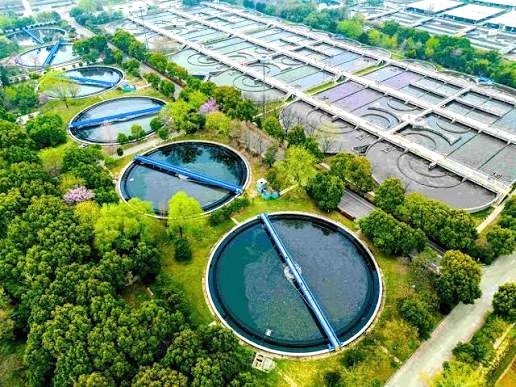
Schneider Electric Advances Water Resilience with Industrial Automation and Cybersecurity at WEFTEC 2026
Introduction
Water and wastewater utilities face growing pressure to modernize infrastructure, manage energy consumption, and strengthen cybersecurity. At WEFTEC 2026, Schneider Electric presents industrial automation and digital technologies designed to address these challenges.The company’s portfolio combines PLC systems, software-defined automation, industrial cybersecurity, and intelligent energy management. These technologies support operational visibility, infrastructure modernization, and more informed decisions across water treatment and distribution networks.Held from September 26–30 in New Orleans, WEFTEC 2026 brings together water industry professionals, technology providers, and engineering specialists. Schneider Electric is exhibiting at Booth #4641.Water Utilities Face Increasing Infrastructure and Cybersecurity Demands
Water utilities must maintain continuous service while managing aging equipment, water scarcity, rising energy costs, and workforce shortages. Meanwhile, cyber threats increasingly affect industrial control environments.Schneider Electric cites previous research indicating that 60% of U.S. leaders expect water-related risks to exceed other infrastructure threats. This finding highlights the growing importance of infrastructure investment and long-term water resilience.Consequently, utilities are exploring digital transformation strategies that improve operational efficiency without requiring complete equipment replacement.For many facilities, modernization involves integrating existing PLCs, SCADA systems, and instrumentation with newer software platforms. This approach can reduce implementation disruption while extending the useful life of installed assets.Modicon PLC Enhancements Strengthen Industrial Cybersecurity
Schneider Electric has introduced new Modicon automation enhancements that address cybersecurity across industrial control architectures. The company reports certification to IEC 62443-3-3 Security Level 2 (SL2).The updated capabilities include encrypted firmware, network authentication, and role-based access control. These features help organizations strengthen access management and protect automation infrastructure.The enhancements support Modicon M580 CPUs, associated communication cards, and Modicon Ethernet switches. They also extend cybersecurity capabilities across the Modicon Edge I/O NTS distributed I/O platform.For water treatment facilities, cybersecurity must extend beyond individual controllers. Engineers should consider network segmentation, access permissions, secure configuration management, and continuous monitoring.IEC 62443 provides a structured framework for industrial automation and control system security. Therefore, aligning PLC deployment with cybersecurity requirements can support more consistent protection across operational technology environments.EcoStruxure Automation Expert Supports Flexible Control System Modernization
Schneider Electric is also presenting EcoStruxure Automation Expert, its software-defined automation platform.The platform supports open automation architectures and flexible plant upgrades. It aims to help operators modernize control systems while retaining compatible existing hardware.This approach addresses a common challenge in water utilities: replacing legacy control infrastructure without interrupting essential services.Traditional modernization projects can require extensive hardware replacement, engineering changes, and commissioning activities. Software-defined automation offers another approach by separating automation applications from specific hardware configurations.However, successful implementation still requires compatibility assessments, migration planning, and appropriate validation. Engineers should evaluate existing PLC configurations, communication protocols, control logic, and system availability requirements.Industrial Cybersecurity Services Address OT Protection
Schneider Electric is showcasing cybersecurity services for operational technology environments.Its offering includes OT security assessments, cybersecurity program development, policy creation, and managed security services. Continuous monitoring, threat detection, and incident response also form part of the portfolio.These services address security requirements across industrial control systems, including PLC, SCADA, and related network infrastructure.Unlike conventional IT environments, water treatment facilities must consider process continuity when responding to cybersecurity incidents. Security controls should therefore account for operational availability, control-system dependencies, and recovery procedures.A structured OT cybersecurity program can help utilities identify vulnerabilities and establish practical protection priorities.TeSys Tera and Altivar Process Support Energy-Efficient Water Operations
Schneider Electric is presenting technologies that address motor control, equipment protection, and energy management.TeSys Tera provides motor protection, control, and monitoring capabilities. These functions help operators monitor motor conditions and manage equipment operation.Motor protection plays an important role in pumping stations, wastewater treatment plants, and other fluid-handling applications. Appropriate protection and monitoring can help reduce equipment damage and unnecessary maintenance.The company is also showcasing the Altivar Process ATV680 low-harmonic drive.This drive supports applications such as pumping, aeration, and chemical dosing. Its capabilities include real-time intelligence and automated diagnostics.In water treatment facilities, variable-speed drives can support process control by adjusting motor operation to application requirements. Engineers should evaluate pump characteristics, hydraulic conditions, motor ratings, and harmonic requirements during system design.Digital Water Management Connects Operational Data and Analytics
Schneider Electric is presenting EcoStruxure Water Advisor, a software solution designed for water management across the water cycle.The platform uses connected data and predictive analytics to support operational decision-making. It provides a digital approach to managing information across water-related operations.Water utilities generate data from treatment equipment, distribution networks, instrumentation, and control systems. However, disconnected data sources can limit operational visibility.Integrated data environments can help teams identify operating patterns, monitor performance, and support maintenance planning.For example, operators may combine equipment status, process measurements, and energy information to investigate unusual operating conditions. The practical value depends on data quality, system integration, and the suitability of analytics for each application.AVEVA CONNECT Supports Industrial Data Integration
Schneider Electric is also highlighting AVEVA CONNECT, a centralized environment for integrating organizational data, applications, and systems.The platform supports information integration across industrial operations. This capability can help teams access relevant operational data and make decisions with greater context.In water and wastewater operations, information often resides across multiple systems. These may include SCADA platforms, maintenance applications, engineering databases, and operational reporting tools.A centralized data environment can reduce information fragmentation. Nevertheless, organizations should establish clear data ownership, access permissions, and integration requirements before deployment.CITI Partnership Supports Open Automation in Water Utilities
Schneider Electric’s water-sector strategy also involves collaboration with system integration partners.CITI, Inc., based in Charlotte, North Carolina, has achieved Alliance Master status within Schneider Electric’s Industrial Automation Alliance Partner Program. This designation represents the program’s highest system integrator tier.CITI specializes in industrial automation and control systems integration. Its services include PLC and SCADA software development, control systems integration, and in-house UL-certified control panel construction.The company serves water, wastewater, industrial, and municipal applications across the southeastern United States.This partnership supports modernization projects involving existing control systems and open automation architectures. System integrators play an important role in translating automation technologies into site-specific engineering solutions.Their responsibilities may include control logic development, panel design, system integration, testing, commissioning, and operational support.WEFTEC 2026 Demonstrations and Technical Sessions
Schneider Electric is presenting its technologies at Booth #4641 during WEFTEC 2026 in New Orleans.The exhibition runs from September 26 through September 30. The event provides opportunities for water industry professionals to discuss automation, cybersecurity, energy management, and infrastructure modernization.The company’s scheduled activities include a technical discussion on modernizing water utilities without replacing all existing equipment.The session, titled Modernize Without the Rip-and-Replace: How Open, Software-Defined Automation Is Transforming Water Utilities, takes place on September 28 from 10:00 to 10:45 a.m. Central Time.The discussion features Schneider Electric’s Fabrice Meunier and CITI President Leonardo Jurado. Jacob Thompson moderates the conversation.Additional in-booth sessions cover OT cybersecurity, digital transformation, artificial intelligence, and proof-of-concept projects.These topics reflect practical questions facing water utilities as they evaluate modernization strategies and emerging automation technologies.Industry Perspective: Modernization Requires More Than New Hardware
Water infrastructure modernization involves more than replacing outdated controllers or installing new software.Successful projects must address process continuity, cybersecurity, system interoperability, engineering resources, and long-term maintenance.Open automation architectures may provide flexibility for future upgrades. However, organizations should assess hardware compatibility, software lifecycle requirements, and integration complexity before implementation.Cybersecurity also requires continuous attention rather than a one-time installation. Utilities should combine secure system design with access management, monitoring, incident response, and recovery planning.Energy management represents another important consideration. Pumping, aeration, and other motor-driven processes create opportunities for operational optimization.In practice, the most useful modernization strategy depends on facility conditions, existing control infrastructure, operational priorities, and available engineering resources.Schneider Electric’s WEFTEC 2026 portfolio illustrates how PLC technology, software-defined automation, cybersecurity services, and digital water management can contribute to a coordinated modernization strategy.About Schneider Electric
Schneider Electric is a global energy technology company focused on electrification, automation, and digitalization.Its portfolio includes intelligent devices, industrial software, software-defined automation, digital services, and energy management technologies.The company serves buildings, data centers, factories, infrastructure, and electrical grids. Schneider Electric reports approximately 160,000 employees and one million partners across more than 100 countries.Its industrial automation portfolio supports applications across manufacturing, infrastructure, energy, and water management.Author Profile
Author: Li MinghaoLi Minghao is an industrial automation technology writer specializing in PLC, DCS, SCADA, and industrial control systems. His technical coverage includes automation architecture, control system modernization, industrial cybersecurity, and digital transformation.He focuses on translating engineering developments into practical information for system integrators, automation engineers, equipment manufacturers, and industrial operations teams.
Read More
Categories:
Uncategorized