Honoring Dr. Hans D. Baumann: Pioneering Control Valve Innovation in Industrial Automation
 In Memoriam: Hans D. Baumann, Ph.D, P.E.
A Lifetime of Innovation in Control Valve Technology
Baumann designed or directed over 30 control valve product lines during his career, including the iconic CAMFLEX valve, produced in eight countries and sold over three million units. His work has shaped modern industrial automation, providing reliable solutions for PLC, DCS, and factory automation applications.Leadership and Influence in Professional Societies
Baumann held influential positions such as Director of the ISA Standards and Practices Board, Technical Expert for IEC TC 65/SC 65B/WG 9, and Chair of the ISA-75.11 Work Group. Recognized by ISA’s InTech magazine as one of the 50 Most Influential Industrial Innovators, he also earned a place in the Process Automation Hall of Fame.Patents, Publications, and Technical Contributions
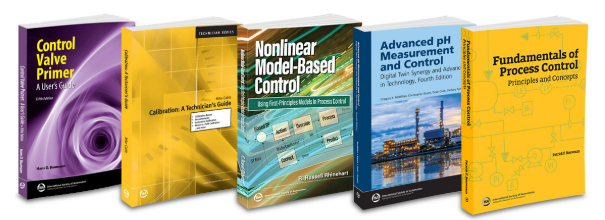
He authored or co-authored seven handbooks on valves and instrumentation, more than 200 papers, and held over 150 patents worldwide. His recent publications, Fluid Mechanics of Control Valves and the fifth edition of Control Valve Primer, continue to guide engineers on valve design, selection, and operation.Baumann prioritized practical, physics-based solutions over trends, pioneering concepts such as the critical flow factor (FL), pipe reducer correction factor (Fp), and modified valve style factor (Fd). His work on valve noise prediction led to ISA-75.17-1989 and IEC Standard 60534-8-3.Advancing Industrial Automation Through Practical Design
Baumann’s engineering philosophy emphasized understanding the fundamentals of process control. His ABC Method for noise prediction exemplifies his approach: simplifying complex phenomena using physics-based models. This methodology remains a benchmark for control valve design in industrial automation, ensuring reliability and efficiency in PLC and DCS-based systems.Professional Career Across Continents
Baumann began in Germany, gaining hands-on experience in foundries and toolmaking, which shaped his practical design skills. He later worked at Masoneilan, A.W. Cashco, and Worthington S/A, eventually founding his own company, H.D. Baumann Associates. After selling to Emerson Electric, he continued at Fisher Controls as Senior Vice President.His global influence included guest professorships at Kobe University (Japan) and the Korean Advanced Institute of Technology. Baumann’s career spanned nearly 70 years, reflecting deep expertise and a lifelong commitment to industrial automation.Awards, Affiliations, and Recognition
Baumann earned numerous honors, including seven U.S. Vaaler Awards, the ISA UOP Technology Award, and international recognition from Germany, France, and Japan. He was an Honorary Member of ISA, Life Fellow of ASME, and a member of Sigma Xi. His designs and standards significantly shaped control valve engineering worldwide.A Legacy of Knowledge and Purpose
Baumann lived with purpose, generously sharing his experience and expertise. He leaves behind two children, five grandchildren, and a great-grandson. His legacy continues through the engineers, standards, and technologies he influenced.“Our country desperately needs innovative entrepreneurs and efficient managers in order to survive this increasingly competitive global environment.” – Hans D. Baumann “I would advise students and graduates alike to make more use of their brain and imagination.” – Hans D. Baumann
Practical Insights for Industrial Automation Professionals
Baumann’s principles guide modern industrial automation:- Valve Sizing and Selection: Apply physics-based methods to optimize control valve performance.
- Noise Prediction: Use ABC Method or similar models to ensure safe, quiet operations.
- Modular Control Systems: Integrate valves effectively within PLC and DCS systems for maximum efficiency.

 Figure 1: X-bar control chart.